
IBS Group has launched Naviq Technology, an artificial intelligence company dedicated to the global travel industry, backed by a substantial USD 500 million investment over the next five years. The new venture aims to partner with major travel players to drive business transformations, modernise operations, and leverage AI for new revenue streams, with plans for significant job creation in India.

The Atlanta Police Department has significantly increased security measures for the World Cup semi-final between England and Argentina, two nations with a historically fierce football rivalry, deploying additional personnel and resources across the city and stadium.

N Chandrasekaran, chairman of Tata Sons, announced he would not seek reappointment when his term ends in February 2027, following a series of departures by senior figures closely associated with former chairman Ratan Tata, including Vijay Singh and Mehli Mistry, amid a deepening power struggle and governance dispute within the Tata Group.

Mahindra Group CEO Anish Shah emphasizes the critical role of Artificial Intelligence, advocating for its meaningful integration at scale across all aspects of the company. He highlights that AI is redefining industries and decision-making, urging a proactive approach to leverage its potential. Shah also addresses global uncertainties, stating the group's commitment to accelerate amidst challenges and aim for global leadership.

India and Australia have signed significant agreements covering civil nuclear energy, maritime security, and critical minerals, reinforcing their partnership's role in ensuring a peaceful Indo-Pacific. The pacts facilitate uranium supply from Australia to India and enhance cooperation in defence, cyber, and critical technologies.

Indian startup funding plummeted by 43 per cent year-on-year to $7.81 billion between March 1 and June 15, 2026, largely due to the West Asia conflict, which has amplified global risk perceptions, tightened liquidity, and led to rupee depreciation, making global investors cautious.

Operation Safed Sagar is prime purpose may be to honour IAF warriors but it is an inadvertent reminder of how we went from a nation of Jung na hone denge to Ghar mein ghus ke marenge, observes Sukanya Verma.

Notwithstanding the economic complementarities and the host of agreements for deepening economic relation on a host of areas, both sides share common viewpoints on the foreign policy domain and seek common grounds to serve as a counterweight to China, notes Dr Rajaram Panda.

Chinese Foreign Minister Wang Yi met with National Security Advisor Ajit Doval in New Delhi, stressing the importance of respecting each other's "core interests" and implementing leaders' consensus for stable bilateral relations. Wang highlighted that India and China should view each other as partners, not rivals, and properly handle sensitive issues like the border dispute to foster cooperation and accelerate the modernisation of the Global South.

The Indian government is accelerating its sale of minority stakes in state-owned companies, including a significant offer for sale (OFS) in Life Insurance Corporation of India (LIC) expected "very soon," to meet its 80,000 crore mobilisation target and reduce its holdings to 75 per cent in most listed PSUs by year-end.

EY India has launched its Cyber Performance Management (CPM) platform, an integrated solution designed to help enterprises quantify and manage cyber risk in real-time. This platform leverages AI and cybersecurity to provide decision intelligence, enabling organisations to identify and address threats proactively and translate cyber exposure into financial insights.
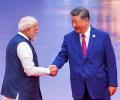
India's dual pursuit of a robust strategic partnership with Washington and a pragmatic, tension-management policy with Beijing represents the essence of modern multi-alignment. By embracing economic pragmatism, learning to compartmentalize political differences, and engaging in continuous dialogue, India can secure its borders, grow its economy, and contribute to a stable, multipolar Asian century, points out Ambassador Rajasekhar.

With over 75 per cent indigenous content, the frigate is among the most self-reliant frontline warships built in India.

India is growing fast, but to keep growing strong, the government must make more things at home, create jobs, and spend money wisely, suggests Rajiv Memani, regional managing partner, Africa-India Region, EY.
BikeWo Green Tech and Kwik Flite Support have signed an initial pact to develop an integrated air cargo, aviation logistics, and multimodal freight platform. This collaboration aims to combine road mobility with aviation capabilities to serve various industries, focusing on high-value and time-sensitive logistics across India, including Tier-II and Tier-III cities.

Noel Tata, a veteran of the Tata group, announced his decision to step down as the chairman of Voltas, following a similar move at Trent, citing the development of a new generation of leaders within the company.

Hyderabad-based Midwest Ltd has become the first Indian private company to secure overseas critical mineral mines, sealing a deal with Indonesia's state-run PT Perusahaan Mineral Nasional (PERMINAS) to ensure a long-term supply of rare earths.
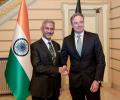
The era where nations thrived through rigid alignments is giving way to an age where the connective State defines power. For India, that era has arrived, points out Dr Nishakant Ojha.

A senior US official has warned against the weaponisation of digital and artificial intelligence sovereignty by political voices, urging nations to avoid costly re-invention of existing technology. The official highlighted the economic dangers of rebuilding entire tech stacks and emphasised India's crucial role as an indispensable partner in global technological leadership due to its engineering talent and innovation ecosystem.

India's Goods and Services Tax (GST) collections saw a significant 14 per cent increase in June, reaching approximately Rs 1.95 lakh crore. This surge was primarily driven by a substantial 34.6 per cent growth in tax mop-up from imports, alongside a 6.5 per cent rise in domestic supplies, reflecting the country's economic resilience despite global uncertainties.

The United States has implemented a 10 per cent tariff on goods imported from India and 16 other countries, citing efforts to combat forced labour in production.
Persistent Systems announced an agreement to integrate a team from Concise, a software engineering and IT consulting company, to expand its Eastern European footprint.

The remarkable rise of smallcaps reflects the emergence of a broad set of specialised businesses operating in industries where the sectoral tailwinds remain considerably stronger than macroeconomic headwinds, points out Debashis Basu.

A new report by EY-Parthenon and CREDAI indicates that Generative AI (GenAI) could inject USD 14-17 billion into India's real estate economy over the next seven years. The technology is expected to significantly enhance operational efficiency, boost sales velocity by 30-50 per cent, and accelerate product launches, offering competitive differentiation and improved customer experiences for developers.
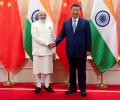
Chinese President Xi Jinping described India and China as "good neighbours, friends and partners", saying that achieving "dragon and elephant dancing together" is the right choice for both countries.

Global tech major Salesforce has committed to equipping one million learners across India with AI-focused skills by 2030, leveraging government partnerships, virtual internships, academic centres, and its partner network.

China and Pakistan concluded their strategic dialogue, reiterating their opposition to unilateral actions in South Asia and discussing Kashmir, Afghanistan, and trilateral cooperation.

The FIFA World Cup final between Spain and Argentina garnered nearly 63 million viewers in the United States, setting new viewership records and highlighting football's increasing popularity in the country.

Adani Group Chairman Gautam Adani announced a capital expenditure programme of over 2 trillion for Adani Power, aiming for 45 gigawatts (Gw) capacity in five years, including a significant entry into nuclear power with a target of 10 Gw by 2035 through Adani Atomic Energy.

Despite aggressive expansion, India's solar power sector faces significant hurdles from rising regional disparities in installed capacity and a looming manufacturing glut due to overcapacity in domestic solar equipment production, potentially leading to consolidation and pricing pressures.

Infosys, India's second-largest IT services firm, has appointed company veteran Ashiss Kumar Dash as CEO designate, with the leadership transition scheduled for April 1, 2027, after current CEO Salil Parekh completes his second term.

Infosys on Tuesday announced a strategic collaboration with American artificial intelligence company Anthropic to develop and deploy advanced enterprise AI solutions for companies across telecommunications, financial services, manufacturing, and software development.

Indian IT service providers face heightened competition from AI-native firms in the next three years, potentially eroding their revenue base unless they remain competitive and protect recurring businesses, according to a report by S&P Global Ratings.
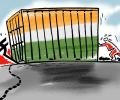
The India-Oman free trade agreement, operationalised on June 1, is set to create significant export opportunities for India's labour-intensive and value-added sectors, including textiles, gems and jewellery, and marine products, while also strengthening energy security.

Indian drone startup Garuda Aerospace has partnered with Extensee SAS to deploy Airbus' Flexrotor unmanned aerial vehicles internationally. This collaboration aims to leverage Extensee's operational expertise for various long-range autonomous missions, expanding Garuda Aerospace's Drone-as-a-Service offerings globally.

Modi, who arrived in Kuala Lumpur on Saturday on a two-day visit, referred to the trade deals India agreed with various countries and said India is seen as a "trusted partner for growth".

C Joseph Vijay's Jana Nayagan is not just a film but a potent political statement, strategically crafted to align with his political aspirations and claim the legacy of M G Ramachandran, notes Saisuresh Sivaswamy.

For the foreseeable future, the most likely outcome remains continuation of the status quo. Taiwan will remain self-governing without formally declaring independence, while China continues to apply sustained pressure short of war, predict Krishnan Srinivasan and Manoj Mohanka.

A new report suggests China's maritime vulnerability lies in the Strait of Hormuz, not Malacca, creating strategic competition in the Indian Ocean.

'Our leaders, including Mallikarjun Kharge and Rahul Gandhi, are in touch with all Opposition parties, including the DMK and the AAP.'
